ARCC James Haeker Distinguished Leadership Award

Stephen Selkowitz is an Affiliate and retired Senior Advisor for Building Science at LBNL, after a 40+ year career as Group Leader of the Windows and Daylighting Group, and Head of the Building Technology and Urban Systems Department. An internationally recognized expert on window technologies, façade systems, and daylighting, his team collaborated with academic and industrial R&D teams worldwide to create new high performance design solutions for buildings. He has lectured in architectural courses and been a frequent invited speaker (300+) to industrial, academic and professional groups on many aspects of building technologies, integrated systems and building performance. He is the author/co-author of over 200 publications, 5 books and holds 3 patents. Selkowitz received the Lifetime Achievement Award for Societal Impact from LBNL, is a Fellow and on the Board of the Façade Tectonics Institute, is a past member of the Board of Directors of the National Fenestration Rating Council and served on technical advisory panels of numerous national building efficiency initiatives in the U.S., with the International Energy Agency and with overseas RD&D programs in Norway, Singapore, New Zealand, Australia, and U.K.. Before joining LBNL he was a principal in a consulting engineering firm and taught courses in Environmental Controls and Alternative Energy Systems. Selkowitz holds a BA in Physics from Harvard College and an MFA in Environmental Design from California Institute of the Arts.
Mary Kihl Distinguished Service Award
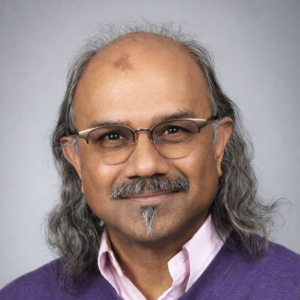
Dr. Saif Haq is an accomplished architectural scholar, researcher, and academic leader whose work investigates the complex relationships among spatial configuration, human cognition, user experience, and health outcomes in medium sized complex designed environments. He has a PhD from the Georgia Institute of Technology, an MS from MIT and a professional Bachelor of Architecture from the Bangladesh University of Engineering and Technology.
Dr. Haq has developed an extensive body of peerreviewed research with publications in leading journals including HERD, Environment and Behavior, Environment and Planning B, and the Journal of Urban Design. Internationally recognized for his contributions, he has advanced understanding of spatial cognition in both real and virtual environments, informed the design of healthcare facilities, and shaped contemporary discourse on cognition, wayfinding, walkability, accessibility, and urban form.
In addition to his scholarly contributions, Dr. Haq has a distinguished record of service and leadership. He founded and directed the innovative Design for Health program at Texas Tech University, and has served as Associate Dean for Research and Associate Dean for Academics. Nationally, he has held influential roles within the Architectural Research Centers Consortium (ARCC), the Environmental Design Research Association (EDRA), and the Center for Health Design. His service includes chairing conferences, leading research committees, mentoring doctoral students, and contributing as a reviewer, examiner, and jury member for academic and professional organizations around the world. He has also coedited notable research volumes, including Movement and Orientation in Built Environments and the ARCC 2023 proceedings, The Research Design Interface.
ARCC Best Journal Article Award


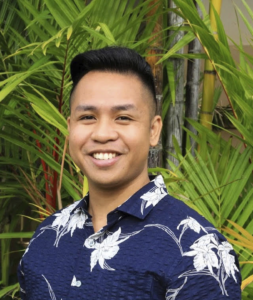

Journal Article Title: A Science and Community-Driven Approach to Illustrating Urban Adaptation to Coastal Flooding to Inform Management Plans. https://doi.org/10.3390/su16072849
Wendy Meguro, AIA, LEED Fellow is a licensed architect and associate professor at the University of Hawaiʻi at Mānoa where she directs the School of Architecture’s Environmental Research and Design Laboratory and Sea Grant College Program’s Center for Smart Building and Community Design. Her teaching and research focus on high-performance architecture and enabling coastal developments to adapt to sea-level rise and future hotter weather, grounded in previous professional practice experience at Atelier Ten.
Josephine “Jojo” Briones, DArch, LEED Green Associate, is a Research Associate at the University of Hawaiʻi at Mānoa and an AIA Associate who serves on the AIA Honolulu Committee on the Environment. She has expertise in climate change adaptation and mitigation in the built environment and contributes to interdisciplinary research to translate climate data into actionable guidance for practice, policy, and community decision-making in Hawaiʻi.
German “Gerry” Failano graduated with a Masters in Political Science and a Masters in Landscape Architecture at the University of Hawaiʻi at Mānoa. He is a former Graduate Research Assistant at the UH Environmental Research and Design Laboratory and currently works as a landscape designer for Roth Ecological Design Int. LLC, focusing on sustainable water resource management and green infrastructure.
Dr. Charles “Chip” Fletcher is the Dean of the School of Ocean and Earth Science and Technology (SOEST), University of Hawai‘i at Mānoa, and the former Chair of the Honolulu Climate Change Commission. Chip’s research and teaching focus on climate change, coastal community resiliency, and Natural Coastal Systems .
ARCC Book Award
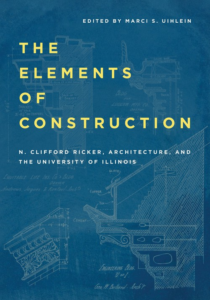
Book Title: The Elements of Construction
Marci S. Uihlein, P.E., M. ASCE, Assoc. AIA, is an Associate Professor and Associate Director for Research at the School of Architecture at the University of Illinois, Urbana-Champaign. Her research focuses on the structural engineering profession: its history, the professional relationship between architects and engineers, and creativity. Prof. Uihlein has articles published in the Practice Periodical on Structural Design and Construction, Journal of Architectural and Planning Research, and Construction History. She is the editor of The Elements of Construction (University of Illinois Press, 2025), an examination of a nineteenth-century construction textbook that parallels the changes in building technology. Before coming to academia, she was an engineer with Arup in San Francisco and Los Angeles, where she designed public and private building projects. She is the past-president of the Building Technology Educators’ Society and former executive editor for the Taylor & Francis journal Technology | Architecture + Design. She serves on the management board of the Construction History Society of America and the executive council of the International Association of Structures and Architecture. Honors include being a 2016-2018 Design Research Fellow for the College of Fine & Applied Arts, a 2020-2021 Building Pathways Fellow with the Office of the Provost at the University of Illinois, and an honorable mention for the 2021 ACSA Diversity Achievement Award.
ARCC Mid-Career Research Award

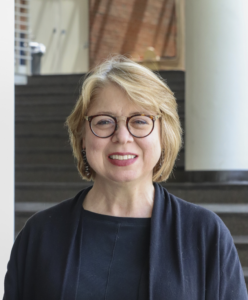
Pari Riahi is a registered architect, Associate Dean of Research and Engagement in the College of Humanities and Fine Arts, and Associate Professor of Architecture at University of Massachusetts Amherst. Prior to joining UMass, she taught at RISD, MIT, and SUNY Buffalo. Riahi completed her PhD at McGill University in 2010. Her first book, Ars et Ingenium: The Embodiment of Imagination in Francesco di Giorgio Martini’s Drawings (Routledge, 2015) traces the historical inclusion of drawing as a component of architectural design. Riahi is the instigator, co-convenor and co-editor of a series: Exactitude: On Precision and Play in Contemporary Architecture (UMass Press, 2022), Multiplicity: On Constraint and Agency in Contemporary Architecture (UMass Press, 2024) and Quickness: On the Rhythms of Time in Contemporary Architecture (UMass Press, Projected 2026/2027). She is currently working on a book project, titled: Architectures of Collectivity. Her work has been published in the Journal of Architecture, Journal of Architectural Education and Journal of Interior Architecture and Adaptive Reuse. She is an international Editor for the Journal of Architecture and member of the Board of Directors in the Society of Architectural Historians.
ARCC New Researcher Award
Sabri Gökmen, PhD, is an assistant professor at the University of North Carolina at Charlotte and a computational designer whose work explores generative systems as a medium for spatial, cultural, and material inquiry. He received his PhD in Design Computing from the Georgia Institute of Technology, where his work bridged architecture and computation, drawing theoretical inquiries into form and symmetry rooted in Romanticism.
Gökmen’s research operate at the intersection of algorithmic design, artificial intelligence, and architectural history. Informed by cultural heritage research in Türkiye, his recent work investigates computational studies of Seljukera muqarnas geometries and AIassisted analysis of Ottomanperiod Safranbolu houses. These studies translate historical works into structured datasets and generative workflows that merge artificial intelligence, parametric algorithms, and iterative human intervention. His research has been supported by national and international grants and disseminated through peerreviewed journals, conferences, and exhibitions.
Alongside his research, Gökmen engages digital fabrication as an extension of computation into material space. Recent projects explore robotic wood bending and the automated fabrication of minimal surfaces, translating material behavior into controlled physical deformation and structural expression. His creative practice spans installations, public art, blockchainbased generative collections, and fabricated artifacts, engaging questions of computational geometry, fabrication, and collective authorship.
ARCC Research Incentive Award


Research Proposal Title: Revisiting the Ten Shades of Green: A Platform for Contemporary Ecological Architecture Research
Mary Ben Bonham, AIA, NCIDQ, LEED-AP, is Professor of Architecture and Interior Design at Miami University, where she teaches design studios and seminars in environmental systems and sustainability. With a background in practice and research, Bonham’s work focuses on the integration of ecological systems into design education and the built environment. Her book, Bioclimatic Double-Skin Façades (Routledge, 2019), gave the field a comprehensive source to understand double-skin types and functions while examining façade technology in the context of the principles and evolution of bioclimatic architecture. As past faculty for winning DOE Solar Decathlon interdisciplinary student teams and as Affiliate Faculty with Miami’s Institute for the Environment and Sustainability, Bonham has guided numerous graduate and undergraduate students from architecture, sustainability, and environmental science majors to apply sustainability frameworks to case study research. She has been awarded two Nuckolls Fund for Lighting Education grants as co-investigator, including Lighting Across the [Design] Curriculum, an online education platform recognized with the 2013 IDEC Media Award. The Ten Shades of Green project in collaboration with Asst. Prof. May Khalife will allow Bonham to build on a long-standing commitment to advancing climate literacy and ecological ethics within architectural education and practice.
May Khalife, Ph.D., is Assistant Professor of Architecture and Interior Design at Miami University, Ohio, where she teaches design studios and seminars exploring socially engaged and equitable architectural practices. She is the 2026 recipient of the ACSA/AIAS New Faculty Teaching Award. Prior to joining Miami University, Khalife served as adjunct faculty at the University of Cincinnati and the University of North Carolina at Charlotte, contributing to architectural education through teaching, mentorship, and peer review for regional and national scholarly journals. Khalife’s research and teaching examine intersections of gender, disability justice, community engagement, and social movements within architectural modernism and historic preservation. She is currently collaborating with Professor Mary Ben Bonham on Buchanan’s Ten Shades of Green, advancing ecological and socially engaged design discourse. A licensed architect in Beirut since 2014, Khalife brings professional experience in historic preservation, ranging from projects with the Rockefeller Foundation in Byblos to local initiatives in Tripoli, into her teaching and scholarship, bridging historical and contemporary case studies across the United States and Lebanon. Her work connects theory, research, and practice, preparing students to engage critically with social responsibility in architectural design.
ARCC Dissertation Award
Mania Taher is an Assistant Professor in the School of Art & Design at the University of Illinois Urbana–Champaign (UIUC). She holds a Doctor of Architecture degree from the University of Wisconsin–Milwaukee and a Master of Architecture and Urban Design from the Graduate School of Architecture, Planning and Preservation (GSAPP) at Columbia University. Taher’s research examines feminist object practices within American domestic spaces, focusing on how everyday vernacular objects shape the cultural landscapes of immigrant households. Through this lens, her work explores themes of displacement, gender, and race, revealing how ordinary domestic objects and spatial practices become meaningful sites of identity, memory, and adaptation for new immigrant communities. Working at the intersection of design and the humanities, Taher employs ethnographic and spatial research methods, including visiting, documenting, and analyzing lived environments, while centering users’ voices to understand how everyday spaces reflect broader social, cultural, historical, and ecological contexts. Her research has been recently supported by the Humanities Research Institute (HRI) and the Office of the Vice Chancellor for Research and Innovation (OVCRI) at UIUC, the American Institute of Bangladesh Studies (AIBS), the Society of Architectural Historians (SAH), the Historic American Buildings Survey (HABS), and the UW-Milwaukee Graduate School.
2026 ARCC-EAAE International Conference: Best Poster Award
Asif Hasan Zeshan at University of Arizona, Tucson, AZ
Sadia Tasnim at AJMA+D, Prescott, AZ
Informality as Infrastructure: Tea Stalls as Socio-Financial Catalysts of Urban Placemaking
2026 ARCC-EAAE International Conference: Best Paper Award
Suncica Milosevic at University of Kansas, Lawrence, KS
Ajla Aksamija at University of Utah, Salt Lake City, UT
Place-Based Retrofitting Strategies for Global Architectural Challenges: A Comparative Analysis of Three Brutalist Building Typologies in the Western Balkans
2026 ARCC-EAAE International Conference Graduate Student Scholarships
Yasaman Ghaffarian at Pennsylvania State University
Satereh Farashzadeh at Pennsylvania State University
Raja Bandari at North Carolina State University
Seonghyuk Son at Clemson University
Farzad Samet at University of Las Vegas