

Adil Sharag-Eldin ©2026, Museum of Art, Cleveland
The Architectural Research Centers Consortium (ARCC) introduces the nominees for the 2026–2028 Board of Directors. The ARCC Board significantly influences the organization’s strategic direction, enhances research networks, and supports the advancement of architectural scholarship. Member institutions are encouraged to participate fully in this election process.
This election will fill four (4) positions: President Elect/Vice President and three (3) At-Large Directors. Each ARCC member institution is entitled to cast one vote per position.
If you are the ARCC representative or an authorized person, please Vote here.
The ARCC Board plays a vital role in shaping the direction of the organization, strengthening research networks, and supporting the advancement of architectural scholarships. We encourage all member institutions to participate fully in this important election process.
MEET THE CANDIDATES
Meet the Candidates
Nominee for PRESIDENT-ELECT / VICE PRESIDENT

Ming Hu, University of Notre Dame
Dr. Ming Hu is Professor and Associate Dean for Research at the University of Notre Dame School of Architecture, where she directs the Built Environment Decarbonization Analysis (BEDA) Lab. Her research integrates life cycle assessment, data analytics, and design innovation to advance low-carbon, cost-effective solutions for the built environment. She leads interdisciplinary initiatives using machine learning, building stock modeling, and community partnerships to develop scalable strategies for retrofitting, urban planning, and climate resilience. With over 140 peer-reviewed publications and four books, Hu bridges academia, industry, and policy.
She served on the ARCC Board from 2018 to 2022.
Ming Hu‘s Statement of Interest
I am honored to apply for the role of Vice President / President-Elect of ARCC. Having served on the ARCC Board from 2018 to 2022, I have a deep appreciation for the organization’s mission, culture, and impact. My past board service was an incredibly rewarding experience, especially during the challenges of the COVID-19 pandemic, when ARCC continued its annual conference, online seminars, awards, and routine activities despite significant technological and logistical obstacles. One of my major contributions was supporting and expanding the ARCC awards program. Since 2021, we added three important categories—the Book Award, Dissertation Award, and Mid-Career Achievement Award—and increased the Incentive Award from $5,000 to $10,000. These efforts strengthened participation, visibility, and recognition for architectural researchers, reaffirming ARCC’s essential role in celebrating and advancing research excellence.
In addition to my ARCC service, my current role as Associate Dean for Research has further strengthened my leadership experience, organizational skills, and ability to build collaborative research infrastructure. I work to support faculty research development, coordinate strategic initiatives, facilitate interdisciplinary collaboration, and advance institutional research priorities. These experiences prepare me well for the six-year leadership commitment of this position: two years as Vice President / President-Elect, two years as President, and two years as a past president.
My vision for ARCC’s growth is not simply numerical expansion, but deeper engagement, broader representation, and greater impact. I would work closely with the Board and current members to identify shared priorities, listen to member needs, and build initiatives that strengthen ARCC’s value to its community. I would prioritize support for early-career faculty and doctoral scholars through mentoring, awards, networking, and leadership opportunities. I would encourage interdisciplinary research connecting architecture with engineering, planning, public health, environmental science, data science, and policy. I would also seek to strengthen international engagement by partnering with global research organizations and expanding participation beyond North America.
I would be grateful for the opportunity to serve ARCC in this leadership capacity and work collaboratively with the Board and members to advance its next phase of growth.
Nominee for AT-LARGE BOARD MEMBER
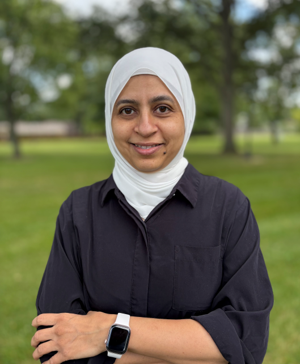
Zahida Khan, Ball State University
Zahida Khan, Ph.D., is an Assistant Professor of Architecture at Ball State University. She holds an M. Arch and Ph.D. in Architecture from the Illinois Institute of Technology in Chicago. She is a highly credentialed specialist in the areas of high -performance building design, sustainability, and advanced building systems, with more than 13 years of international work experience in North America, the Middle East, Africa, and Asia. Zahida is a LEED A P (BD+C), and h er research focus includes building performance, indoor environmental quality, outdoor thermal comfort and microclimates, human behavior, and CFD simulation. One of her key research projects developed a novel framework for the outdoor thermal comfort integrated Human Behavior Simulation framework: “HuBeSIM” using Agent-Based Models.
Zahida Khan’s Statement of Interest
I have always believed that research is a robust tool for shaping ideas and creating meaningful architecture. My connection with ARCC began in the early years of my Ph.D. I presented my first research poster at my university’s student symposium, co-sponsored by ARCC. The experience was long-lasting, whether in making connections or widening our perspective. ARCC nurtures such activities to create better places through research-integrated architecture. It strives to advance dialogue on global challenges. It brings together researchers, educators, and industry partners to lead the future trend in architectural research. These values are ingrained in my efforts as a researcher and an educator in architecture, and I am pleased to express my interest in serving as an At-Large Board Member.
Living and practicing architecture across the world piqued my interest in how people shape architecture and vice versa. My work focuses on human behavior in different indoor and outdoor climatic conditions. I contributed to this research through peer-reviewed publications, book chapters, conference presentations, and service as a guest editor for a peer-reviewed journal. An integrated design approach in my practice helped shape my interdisciplinary collaborative mindset. The 2024 ARCC -EAAE conference was a wonderful experience for me; I witnessed the impact of global collaboration with the latest research trends in the built environment. As an ARCC board member, I would like to contribute to these efforts and advance the field of architectural research.
I involve architecture students in research- driven immersive learning projects with community partners. I encourage them to present their work in symposia. My ongoing university-funded pedagogical research is an example of such efforts, in which students conduct post -occupancy evaluations of a real project and share results through local symposia. Such efforts align well with ARCC goals for educational programs. If selected, I would be honored to serve ARCC by strengthening connections between research, education, and practice.
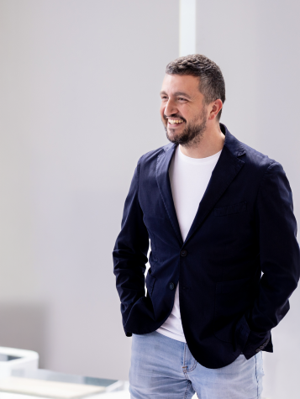
Giovanni Loreto, Kennesaw State University
Giovanni Loreto is an Associate Professor and Associate Dean for Research in the College of Architecture and Construction Management at Kennesaw State University. His work combines research, academic leadership, and the development of institutional partnerships. His scholarship focuses on structural systems, concrete construction, sensing technologies, and computational methods for the built environment. In his administrative role, he has expanded faculty research support, proposal development, interdisciplinary initiatives, and collaborations with industry and public agencies. He served as co-chair of the 2026 ARCC-EAAE International Conference.
His work is guided by a practical interest in creating the conditions through which research can grow.
Giovanni Loreto’s Statement of Interest
My work has always occupied the space where architecture, structures, materials, and design meet. I am an Associate Professor of Architecture whose research focuses primarily on structures, materials, and construction technologies. Although my work often begins with questions of structural behavior, I see it as inseparable from architecture and design. For me, ARCC represents one of the few spaces where research can bring these areas together and create a shared ground for innovation. I believe strongly in the organization’s mission and in its role in advancing rigorous, relevant, and interdisciplinary architectural research.
Serving as co-chair of the 2026 ARCC-EAAE International Conference gave me a much deeper understanding of the organization and its community. The experience went well beyond organizing a conference. It required bringing together scholars, institutions, speakers, professional partners, and sponsors around a common intellectual agenda. It showed me the range of work represented within ARCC and the value of creating spaces where different forms of architectural research can inform one another. It also made clear how much sustained work is required to support a strong and inclusive research community.
Research, to me, is not only the production of knowledge. It is a way of asking better questions, testing ideas, and creating possibilities that can influence design, education, practice, and the built environment.
It also requires collaboration, openness to different methods, and the willingness to connect disciplines that too often remain separated. As a Board member, I would bring this perspective, along with experience in research development, interdisciplinary collaboration, and conference organization. I would be interested in helping ARCC strengthen the connections among its members and continue expanding the role of research within architecture.

Taraneh Meshkani, Kent State University
Taraneh Meshkani is an Associate Professor at Kent State University’s College of Architecture & Environmental Design. She holds a doctoral degree from Harvard University’s Graduate School of Design. Previously, she served as Senior Editor of The Plan Journal and is a former editorial board member of New Geographies. As co-editor-in-chief of Geographies of Information, she has examined the role of digital and spatial networks in shaping urban systems. Her research investigates the intersection of AI, urban data, and computational methodologies in analyzing spatial conditions shaped by socio-political and environmental transformations. She explores how digital infrastructures influence urban spatial organization, governance, and the distribution of resources in contested and environmentally vulnerable territories.
Taraneh Meshkani’s Statement of Interest
I am pleased to submit my nomination to serve on the ARCC Board. Over the past several years, I have regularly attended and presented my research at ARCC conferences, and each experience has strengthened my appreciation for the organization’s collaborative and intellectually generous community. ARCC has become one of the professional communities in which I feel most engaged, and I would welcome the opportunity to contribute to its continued growth and impact.
As a tenured Associate Professor of Architecture and Urban Design at Kent State University, my research explores the intersection of architecture, urbanism, artificial intelligence, spatial justice, and computational design. I view research not only as a means of advancing knowledge but also as a catalyst for interdisciplinary collaboration and innovation in architectural education.
My previous editorial and academic service has prepared me well for a leadership role within ARCC. I served as Senior Editor of The PLAN Journal, where I have edited eight issues, and I am a member of the Editorial Board of Urban Design and Planning (ICE Publishing) and the Kent State University Press. I also previously served for four years on the editorial board of New Geographies (published by Harvard University Press) and co-edited New Geographies 7. In addition, I have served as a juror for The PLAN Award and have organized numerous academic conferences, symposia, and scholarly events that have brought together researchers from diverse disciplines and institutions.
If elected, I hope to contribute actively to ARCC’s governance, conferences, publications, and strategic initiatives while supporting opportunities for interdisciplinary research, emerging methodologies, and meaningful engagement among scholars at all career stages. I would be honored to help strengthen the vibrant community that has contributed so much to my own professional growth and to support ARCC’s continued leadership in advancing architectural research.
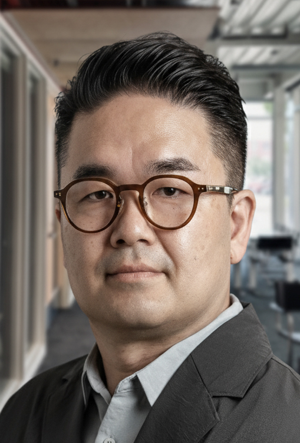
Seung Ra, Oklahoma State University
Seung Ra is a licensed architect and Full Professor at the Oklahoma State University School of Architecture, where he has taught since 2009. He is a Fulbright U.S. Scholar to Taiwan (2026–27), where he will conduct research and teach at the intersection of urban resilience and public space. He is currently a Visiting Professor at Seoul National University and has previously held appointments at the Korea National University of Arts, Yonsei University, the University of Nebraska, and the New York Institute of Technology. At OSU, he serves as chapter president of Phi Beta Delta, the honor society for international scholars. Ra is the director of raSTUDIO, an architectural practice engaged in projects in Korea and international competitions. His research centers on urban resilience, public space, and the cultural dimensions of architecture and design. Professionally, he has contributed to international practices including Studio Daniel Libeskind and Friedrich St.Florian Architects. Ra holds a Master of Science in Advanced Architectural Design from Columbia University and a Bachelor of Architecture from Oklahoma State University.
Seung Ra’s Statement of Interest
I am seeking to serve as an At-Large Board Member of the Architectural Research Centers Consortium (ARCC). My candidacy rests on one clear proposition: I am an internationally connected architectural educator positioned to expand ARCC’s institutional partnerships beyond North America and strengthen the connection between design research, teaching, and emerging technologies. What I would do in the first year. Rather than a broad agenda, I propose three concrete contributions:
1. Initiate an ARCC partnership network with East Asian architecture schools. Through my current appointments and collaborations in Korea and my upcoming Fulbright U.S. Scholar residency in Taiwan (2026–27), I have working relationships with institutions across the region. I would convert these into formal pathways for ARCC — reciprocal conference participation, visiting-scholar exchange, and expanded institutional membership from outside North America.
2. Organize an international research roundtable at the annual conference connecting design-studio research cultures with traditional research methodologies — a recurring tension I presented on at ARCC–EAAE 2026, where my work examined how AI-enabled design practices can encode community knowledge rather than displace it.
3. Support emerging-scholar participation by developing mentorship pairings between doctoral students, junior faculty, and established researchers across member schools — extending the informal mentoring I already do across two continents into an ARCC structure.
Evidence I can deliver. My service record is practical, not aspirational. I direct a study-abroad program spanning Seoul, Kyoto, and Tokyo, handling everything from curriculum to per-student budgets. I recently organized a cross-institutional exchange session between Yonsei University and Oklahoma State University, bringing student urban-design work from both institutions into direct comparative dialogue — a small-scale model of exactly the international exchange I propose for ARCC. I chair a faculty search committee at OSU and serve as chapter president of Phi Beta Delta, the honor society for international scholars — organizational leadership that mirrors the member-facing, internationally oriented service an At-Large Director provides. I have coordinated programs, budgets, and partnerships across institutions in the U.S. and Korea for over fifteen years.
How I would serve. An At-Large Director represents the full membership, not a personal research agenda. My first commitment would be to listen: to survey member schools about what they need from international engagement, where conference and publication opportunities fall short, and what would make ARCC membership more valuable — and to build from their answers rather than my assumptions.
Why At-Large, specifically. The At-Large role exists to extend ARCC beyond regional representation. My career sits at the intersections this role is meant to bridge: U.S. public-university programs and East Asian institutions, studio-based and traditional research cultures, academic research and licensed practice, established faculty and emerging scholars. Connecting those constituencies is not something I would learn on the board — it is what I already do.
It would be an honor to serve, and to leave ARCC with a wider institutional map than it has today.

Farzaneh Soflaei, Morgan State University
Dr. Farzaneh Soflaei is a tenured Associate Professor in the SA+P at Morgan State University. Holding two Ph.Ds., she is a licensed architect, LEED AP BD+C, and USGBC Faculty member with more than two decades of experience in teaching, research, and academic leadership. Her global, multicultural, and interdisciplinary experience across the Middle East, China, and the U.S. informs her scholarship in sustainability, resilient design, and environmental justice. She has authored more than 50 peer-reviewed publications, served as a Guest Editor for international journals, secured external funding as PI, and is committed to mentoring emerging scholars while advancing collaborative architectural research.
Farzaneh Soflaei’s Statement of Interest
I am honored to stand for election to the ARCC Board of Directors and to contribute my experience, leadership, and commitment to an organization that has significantly shaped my scholarly and professional development. Since becoming involved with ARCC nearly a decade ago, I have considered it my academic home for advancing architectural research through rigorous inquiry, interdisciplinary collaboration, and meaningful professional engagement. As an author, presenter, reviewer, conference participant, and most recently Session Chair for several sessions at the ARCC 2025, I have developed a deep appreciation for ARCC’s collaborative and intellectually vibrant community.
My candidacy is grounded in more than two decades of teaching, research, professional practice, and academic leadership across the Middle East, China, and the United States. My research integrates architecture, environmental design, and emerging technologies to address sustainability, resilient design, environmental justice, and the responsible application of artificial intelligence in architecture. As Principal Investigator, I have secured competitive external funding from the (NFWF), VentureWell, and the HBCU Sustainable Communities Initiative while leading interdisciplinary collaborations among universities, practitioners, public agencies, and local communities.
These experiences have strengthened my ability to build partnerships, mentor emerging scholars, and advance impactful, research-informed design. I understand that serving on the ARCC Board requires active engagement beyond conference participation; I welcome the opportunity to contribute to the Board’s governance and strategic planning by participating in monthly meetings, serving on committees and special initiatives, supporting ARCC conferences and publications, reviewing papers and abstracts, and working collaboratively to advance the organization’s mission and long-term goals. If elected, I will actively support ARCC’s mission by fostering interdisciplinary and international collaboration, strengthening connections among research, education, and professional practice, and expanding opportunities for faculty and student engagement.
I am particularly committed to broadening participation across diverse institutions, including HBCUs, promoting mentorship for early-career researchers, and encouraging innovative research that addresses society’s most pressing environmental and technological challenges. I would be honored to help advance ARCC as a globally connected, inclusive community that continues to shape the future of architectural research through excellence, collaboration, and meaningful impact.

Arash Soleimani, University of Redlands
Arash Soleimani, Ph.D., is Professor and Chair of Graduate Studies in the College of Architecture, Design, and Media at the University of Redlands, formerly Woodbury University. His research and teaching focus on computational design, architectural robotics, human -computer interaction, digital fabrication, and sustainable building systems. He is the author of Designing with Algorithms: A Mathematical Guide and has published across architecture, design computing, and interaction design. His academic leadership includes graduate program development, accreditation, funded research, and interdisciplinary collaboration. He has contributed to ARCC as an author, presenter, moderator, and peer reviewer.
Arash Soleimani’s Statement of Interest
I am interested in serving as an At -Large Member of the ARCC Board because ARCC has played an important role in supporting architectural research and bringing together scholars with a wide range of interests, methods, and institutional backgrounds. I would value the opportunity to contribute more directly to that work.
My research sits at the intersection of computational design, architectural robotics, human-computer interaction, sustainable construction, and design education. Over the years, I have worked with colleagues in architecture, engineering, computer science, education, and media arts, and I have led funded research projects, published peer -reviewed work, authored two books, and founded the Design Analytics Lab. I have also been involved with ARCC as an author, conference presenter, panel discussion moderator, and peer reviewer.
In my current role as Professor and Chair of Graduate Studies, I work closely with faculty, students, administrators, and external partners on curriculum development, accreditation, program growth, and efforts to strengthen the research culture across several graduate programs. Much of this work depends on collaboration, careful listening, and the ability to move ideas from discussion into action. I believe those experiences would translate well to board service.
As a board member, I would be especially interested in supporting emerging researchers, creating stronger connections between research and design education, and expanding opportunities for collaboration across institutions and disciplines.
I would also like to contribute to conversations around AI, computation, sustainability, and the changing role of research in architectural practice and education.
I would be honored to serve ARCC and would bring a practical, collaborative, and committed approach to the work of the Board.
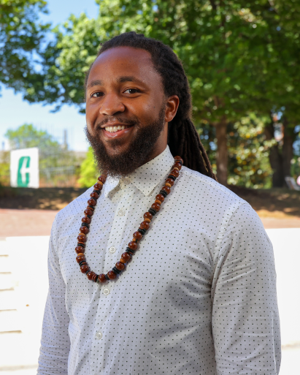
Kyle Spence, UNC Charlotte
Kyle Spence is an Assistant Professor of Critical Design Futures and Computation at UNC Charlotte and Principal of The BAKLab. A transdisciplinary architectural designer, his research synthesizes generative artificial intelligence, digital fabrication, and community-engaged infrastructure to counter ingrained computational assumptions and center culturally resonant spatial narratives. Backed by the Gambrell Fellowship and SoTL grants, his built work—including the permanent EcoDome Pavilion and Mitchelville Heritage Trail—redefines community scholarship as high-performance technical partnership. Frequently featured at ARCC, Spence’s practice bridges rigorous academic computation with the vital cultural gravity of civic enfranchisement.
Kyle Spence’s Statement of Interest
As an Assistant Professor of Critical Design Futures and Computation at UNC Charlotte, I submit my nomination for an At-Large Board Member position with ARCC for the 2026– 2028 term. Having presented my peer-reviewed scholarship across successive ARCC conferences, I have found a genuinely supportive intellectual community here—one that I am eager to serve as it continues to evolve.
My academic and professional practice is defined by moving underrecognized communities from passive consumers of computational tools to active architects of them. Operating at the nexus of generative AI, digital fabrication, and public-interest design, my work translates advanced theoretical optimization into permanent civic infrastructure. Built interventions like the EcoDome Pavilion and the Mitchelville Heritage Trail serve as proven precedents for bridging rigorous computational methodologies with high-impact community enfranchisement.
I recognize that ARCC has a rich, vital history of quantitative data, building science, and engineering collaborations. As the organization expands its trajectory, I offer the Board a seasoned perspective on bridging this empirical rigor with transdisciplinary, qualitative frameworks. I am seeking this leadership role to help steer a strategic vision where rapid technological advancement is inextricably linked to spatial justice and culturally resonant narratives.
Serving on the board, I will bring an operational focus and collaborative spirit to advancing ARCC’s mission. I am fully prepared to execute monthly governance duties, support conference peer-reviews, and drive initiatives that expand the organization’s interdisciplinary footprint. In academia, it is crucial to find your people; I look forward to leveraging my established research frameworks to support the emerging and established scholars of this Consortium.

Masataka Yoshikawa, Lawrence Technological University
Masataka Yoshikawa is an Assistant Professor of Architecture at Lawrence Technological University. His research explores architectural representation, digital design processes, and evolving design sensibilities. He develops workflows integrating 3D simulation, extended reality, digital fabrication, and artificial intelligence to connect conceptual thinking, technical experimentation, and built form. His work was exhibited at the 2025 Venice Architecture Biennale, and he received a 2025 Vision Award and recognition among Architizer’s Visionary 100. Yoshikawa has published and presented internationally at conferences and exhibitions including SIGraDi, CAADRIA, ARCC, and SARA NY ART.
His work also has been published in a range of venues, including the Ken Roberts Memorial Delineation Competition 50th Anniversary Book, How to Visualize Architecture, Architectural Design, Architecture in Perspective, Officina, and Dimensions. He holds a Master of Architecture graduate degree from the University of Michigan.
Masataka Yoshikawa’s Statement of Interest
I am writing to express my interest in serving as an At-Large Member of the ARCC Board. Over the past two years, I have had the opportunity to publish and present my research at ARCC conferences. These experiences have been consistently positive and have strengthened my appreciation for ARCC as a supportive, rigorous, and collaborative community. I have especially valued the thoughtful engagement of conference attendees and their shared commitment to advancing architectural research. Serving on the Board would allow me to contribute more actively to this community and help support the organization that has encouraged my own scholarly development.
My academic and service experience has prepared me to take on this responsibility. Since last year, I have served as the ACSA Faculty Councilor for Lawrence Technological University, representing faculty interests and contributing to conversations within a national architectural organization. At Lawrence Technological University, I have also served on the Faculty Council for the past two years and currently serve as its Chair. Through these roles, I have gained experience in shared governance, communication, organizational leadership, collaboration, and representing diverse faculty perspectives.
As an ARCC Board member, I would work to strengthen connections among researchers, educators, practitioners, and emerging scholars. I am particularly interested in expanding opportunities for early-career faculty and researchers, encouraging interdisciplinary and technology-focused scholarship, and supporting inclusive platforms for sharing research. I hope to bring an engaged, collaborative, and service-oriented perspective to the Board while helping ARCC continue to grow as an influential community for architectural research.
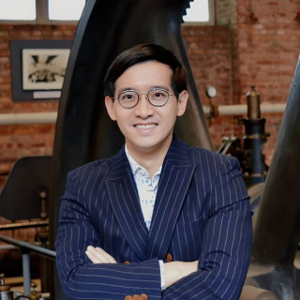
Xiang (Jason) Zhang, Arizona State University
Xiang (Jason) Zhang is an Assistant Professor at Arizona State University, jointly appointed in The Design School and the Del E. Webb School of Construction, where he holds the Design School Energy and Sustainability Professorship. A former UPenn Postdoctoral Fellow, he is an IAQVEC Fellow and a board member of the International Association of Building Physics (IABP). Dr. Zhang’s interdisciplinary research seamlessly bridges architecture and civil engineering to advance sustainable architectural design and actively contributes to global building science discourse.
Xiang (Jason) Zhang’s Statement of Interest
I am writing to express my strong interest in serving on the ARCC Board of Directors. As an interdisciplinary scholar holding a joint appointment in architecture and engineering at ASU, and the recipient of the Design School Energy and Sustainability Professorship, my research bridges architectural technology, data-driven energy performance, and sustainable design. My academic trajectory features significant international leadership. Currently, I serve as the lead for Subtask 2.2 of the International Energy Agency (IEA) EBC Annex-94, directing global efforts to extend the applicability of data-driven methods to different climates. My dedication to high- impact research has been recognized with notable honors, including the 2026 IAQVEC Fellowship, the 2026 Energy and Buildings Best Paper Award (selected out of approximately 2,000 articles), and the COBEE 2022 Best Paper Award.
These milestones, alongside my service on several international scientific committees, have prepared me to bring rigor and academic excellence to ARCC’s review processes. I am eager to leverage this experience to support the ARCC Annual Conference by reviewing abstracts and papers, ensuring it showcases the highest -quality building science and architectural research. If elected, my goal is to strengthen the integration of technical engineering research with creative design education. I aim to advocate for early-career scholars working on climate- responsive systems and AI-powered building design and performance simulation. By championing new interdisciplinary pathways, robust peer-review standards, and mentoring initiatives within ARCC, we can empower the next generation of researchers to develop actionable, scalable solutions for built-environment sustainability. I am fully prepared to dedicate my time to monthly governance, committee initiatives, and strategic planning to advance ARCC’s long- term vision. Thank you for considering my self-nomination!
If you are the ARCC representative or an authorized person, please Vote here.